Hypersonica Raises €100M for Hypersonic Missile Tech
British-German defense startup Hypersonica has raised €100 million ($108 million) to accelerate the development of European hypersonic deep-strike weapons.
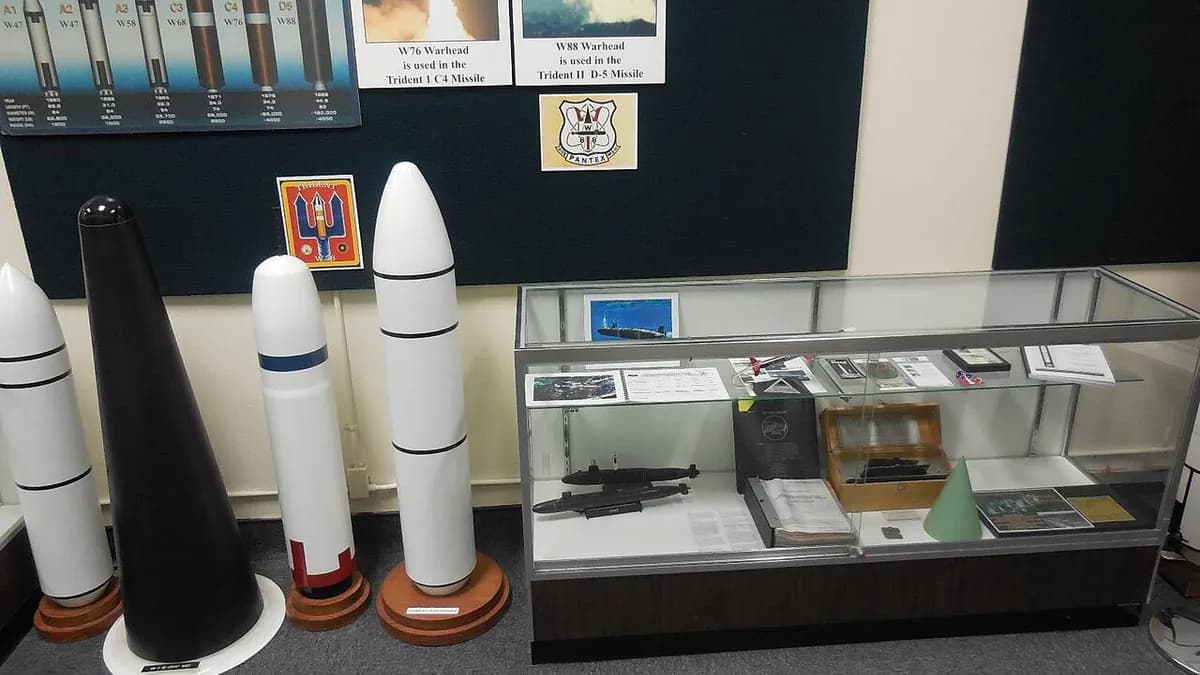
Photo: Unknown (DoD) / Public domain via Wikimedia Commons
British-German defense technology startup Hypersonica announced a €100 million (approximately $108 million USD) Series B funding round on Monday, led by venture capital firms Lightspeed and General Catalyst. The Munich- and London-based company plans to use the capital to scale up development of European hypersonic deep-strike missile systems, transitioning from early prototype testing toward full commercial delivery by 2029.
Key details of the Series B funding round
The new financing round underscores growing venture capital interest in European defense technologies amid heightened regional security concerns. Existing investors, including Plural and 201 Ventures, also participated in the funding round.
Funding amount: €100 million ($108 million USD) in Series B funding.
Lead investors: Venture capital firms Lightspeed and General Catalyst.
Previous capital: €23.3 million ($25 million USD) raised in a Series A round in February 2026 led by Plural.
Headquarters: Dual operations in Munich, Germany, and London, United Kingdom.
Target timeline: Operational deployment of deep-strike systems targeted for 2029.
Hypersonica co-founders Dr. Philipp Kerth, the chief executive officer, and Dr. Marc Ewenz, the chief technology officer, stated that European governments have recognized the need for sovereign hypersonic capabilities and are actively funding dedicated defense programs. The founders added that the Series B capital will help increase testing frequency, expand engineering talent across Germany and the UK, and support European industrial capacity.
Why non-American defence autonomy matters to Europe
European defense posture has faced scrutiny since the outbreak of war in Ukraine, which highlighted significant gaps in long-range precision strike infrastructure across the continent. Historically, European militaries have depended heavily on air-launched systems like the UK and France's Storm Shadow and SCALP missiles, or turned to American imports for ground-launched long-range strike capabilities.
However, acquiring U.S. hardware subjects European nations to the International Traffic in Arms Regulations (ITAR). ITAR gives the United States government oversight and veto power over where weapons containing American components can be deployed or exported. Hypersonica stresses that its hardware and software are fully developed, owned, and produced within Europe, making them completely independent of ITAR restrictions.
Government funding across Europe is shifting toward long-range strike capabilities. Under the Trinity House Agreement between the United Kingdom and Germany, an initial £770 million (around $1 billion USD) has been committed over four years to a joint Deep Precision Strike program. Additionally, a NATO-led multinational initiative established in July envisions up to £37 billion ($48 billion USD) in long-range precision strike investments over the coming decade.
How Hypersonica’s hypersonic technology works
Hypersonic weapons travel at speeds exceeding Mach 5—more than five times the speed of sound—and possess the ability to maneuver in mid-flight. Unlike traditional ballistic missiles, which follow predictable parabolic arcs, hypersonic flight paths can dynamically shift, making them exceptionally difficult for existing air defense radars and interceptors to track and destroy. Both Russia and China have already fielded operational hypersonic systems.
Hypersonica made European aviation history in February 2026 when it completed a flight test of its HS-1 prototype. The craft achieved speeds beyond Mach 6 over a flight distance exceeding 300 kilometers (186 miles), becoming the first privately funded European defense venture to achieve hypersonic flight. The company maintains that its proprietary development approach reduces development costs by more than 80 percent compared to traditional defense procurement methods.
"Strategic autonomy begins with the ability to build critical technologies at speed, at scale and at a fraction of the cost of traditional systems," said Jeannette zu Fürstenberg, president and managing director at General Catalyst.
What happens next for the defense sector
Hypersonica plans to allocate its fresh capital toward expanding its engineering and manufacturing footprint in both Germany and the United Kingdom, creating hundreds of high-tech jobs. The startup is also deepening partnerships with established European defense contractors and government procurement agencies.
Europe is pursuing multiple parallel paths to bolster its security architecture. The European Long-range Strike Approach initiative unites France, Germany, Italy, Poland, Britain, the Netherlands, and Sweden in a collective effort to build domestic strategic strike systems. With its target delivery date set for 2029, Hypersonica aims to demonstrate that private startup agility can deliver advanced defense hardware faster and cheaper than legacy defense contractors.
A federal judge blocked part of New York's algorithmic rent-setting law, citing First Amendment protections for commercial speech in a ruling affecting RealPage.
A PYMNTS Intelligence study shows firms using three or more AI fraud tools block 90% of attempts before money leaves accounts, highlighting the need for layered defenses.
Southeast Asian super app Grab reported a 27% revenue increase as its mobility, delivery, and financial units all reached profitability for the first time.
MIT researchers warn that privacy laws will become a key factor in AI development, giving an edge to firms with strong data governance and internal AI stacks.
DeepSeek’s record $15.9 billion raise pushes October’s global venture funding to $59 billion, a 45% jump from last year. The deal highlights China’s growing influence in AI and the concentration of capital in a few mega‑rounds.
New research from the University of Washington reveals that AI models used in hiring and testing systematically penalize candidates with accents, raising concerns about bias in automated recruitment.