NASA seeks commercial help to boost Hubble in 2030s
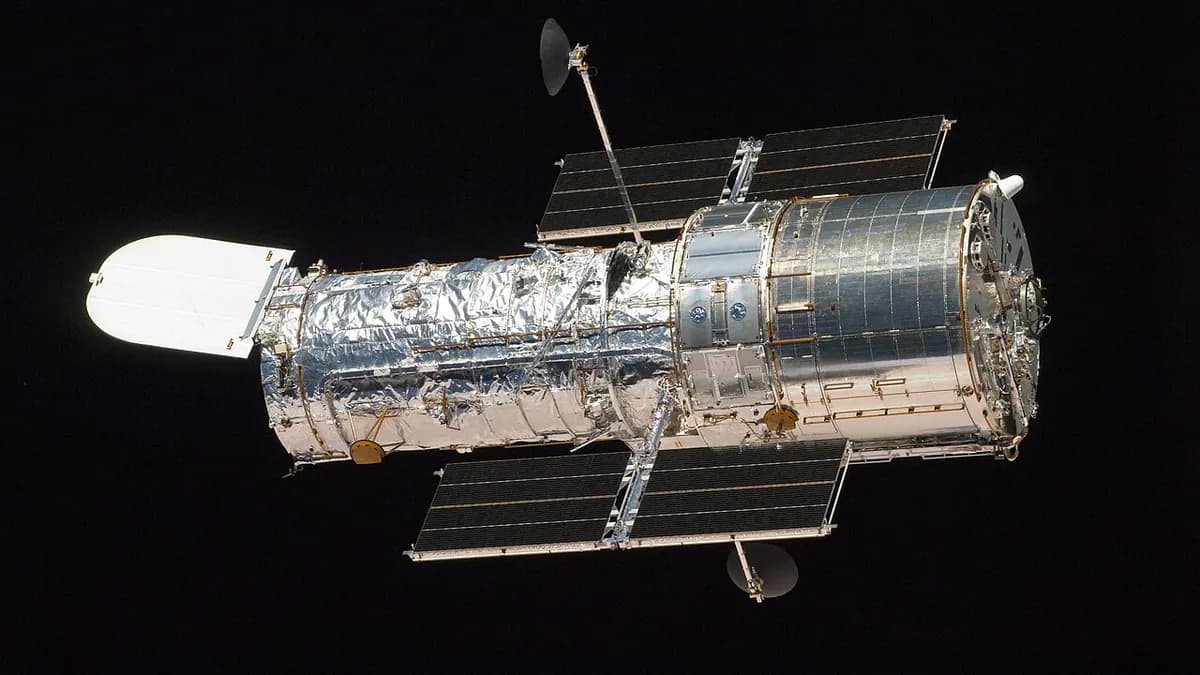
NASA has opened a Request for Information, inviting private space firms to propose cost‑effective ways to raise Hubble’s orbit or guide its safe disposal before a likely 2033‑34 re‑entry.
NASA announced a new Request for Information (RFI) inviting commercial space companies to propose how to lift the Hubble Space Telescope to a higher orbit, service it, or steer it to a safe disposal site before a projected re‑entry in 2033‑34. The agency kept the RFI open until 3 p.m. ET on November 30, 2026, and expects any viable mission to launch by 2032.
What NASA is asking
The RFI outlines three possible approaches:
Boost Hubble’s altitude from its current ~470 km to at least 600 km, extending its scientific life.
Perform in‑orbit servicing to upgrade or repair the telescope.
Guide the telescope to a controlled, ocean‑impact disposal to eliminate ground‑risk.
NASA Administrator Jared Isaacman emphasized the taxpayer angle, saying the agency owes it to the public and the scientific community to explore “innovative and cost‑effective ways to extend the life of an asset already on orbit.”
“If there are innovative and cost‑effective ways to extend the life of an asset already on orbit, we owe it to the American taxpayer and the scientific community to explore them,” Isaacman said.
Associate Administrator Nicky Fox highlighted the growing capabilities of the private sector, noting recent successes in satellite capture and servicing.
Financial and business implications
While NASA has not earmarked funding for a Hubble rescue, the RFI could spark a new revenue stream for companies that can demonstrate a viable solution. Potential participants include:
SpaceX, which already offers crewed and cargo launch services and has a history of collaborating with NASA.
Rocket Lab, known for its lightweight launch vehicles and recent in‑space capture experiments.
Emerging robotics firms developing autonomous refuelling and servicing hardware.
Winning a contract—or even securing a partnership—could validate a firm’s in‑orbit servicing platform, opening doors to future government and commercial missions such as satellite life‑extension, debris removal, and on‑orbit manufacturing.
Technical challenges and market opportunities
Boosting Hubble is not a simple altitude change. The telescope weighs about 11,000 kg, and a successful lift must add roughly 130 km to its orbit without damaging its delicate optics or the soft‑capture mechanism installed during the 2009 shuttle servicing. According to the RFI, the mission would require:
A launch vehicle capable of delivering a dedicated servicing spacecraft to low‑Earth orbit.
Robotic or crewed docking capability that can attach to Hubble’s capture fixture.
Propulsion to raise the orbit to at least 600 km and optionally perform station‑keeping.
These requirements align with ongoing investments in autonomous rendezvous technology, a market projected to grow beyond $5 billion by 2035. Companies that succeed could leverage the same hardware for other high‑value assets, such as communications satellites or future science platforms.
Why it matters to investors and consumers
Beyond preserving a cultural and scientific icon, the Hubble RFI signals a broader shift: the federal government is actively courting private innovators for legacy‑system upgrades. Investors should watch for:
Funding rounds or strategic partnerships announced by firms responding to the RFI.
Patent filings related to soft‑capture mechanisms, autonomous docking, and in‑orbit propulsion.
Policy updates from NASA that could earmark future budgets for commercial servicing contracts.
For consumers, a successful Hubble boost would keep delivering the visible‑light and ultraviolet images that fuel education, outreach, and commercial licensing deals for everything from museum exhibits to high‑resolution stock photography.
What to watch next
The deadline for proposals is November 30, 2026. NASA will evaluate submissions and may issue a follow‑up solicitation or a formal contract later in 2027. Key milestones to monitor include:
Announcement of shortlisted companies (expected early 2027).
Any indication of budget allocation in NASA’s FY 2028 appropriations.
Technical concept reviews that could reveal new commercial servicing architectures.
Even if no firm is selected, the RFI itself demonstrates the agency’s willingness to outsource complex orbital tasks—a trend that could reshape the economics of space operations for years to come.