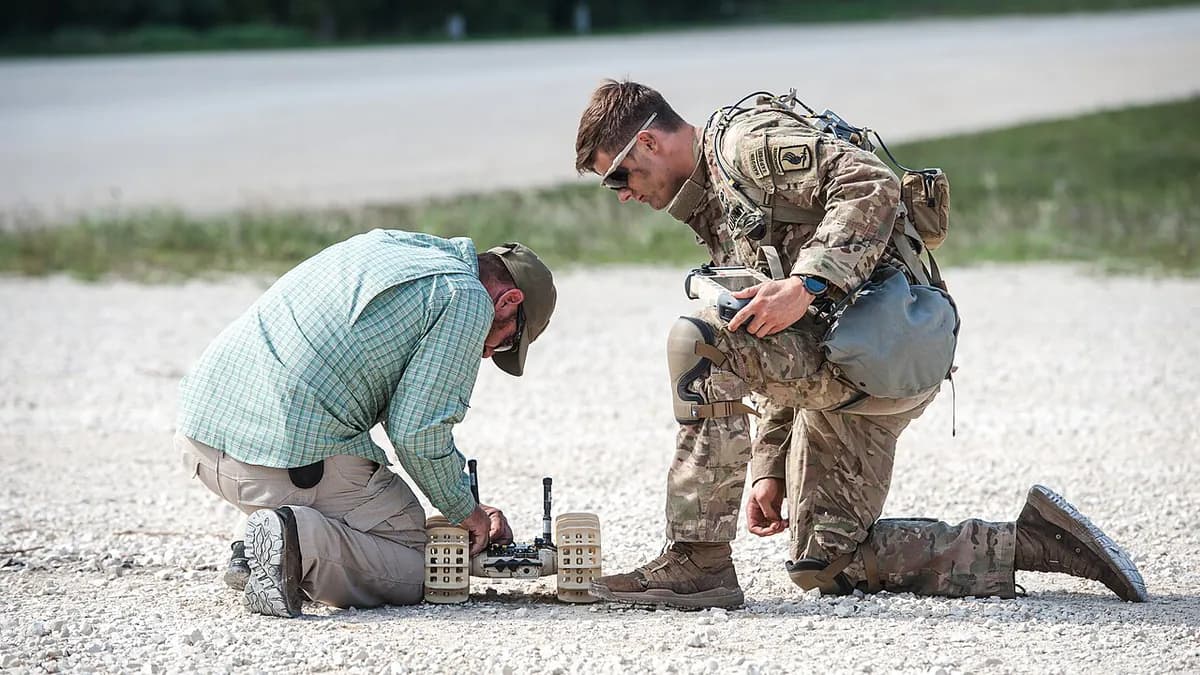
Ukraine Ground Robots Face Winter Test in Mud and Snow
Ukraine has contracted thousands of ground robots to replace front-line troops, but autumn mud and winter weather now pose serious operational challenges.
Ukraine has rapidly expanded its fleet of unmanned ground vehicles along the front lines, relying on automated machines to carry out high-risk combat missions. However, as seasonal weather shifts, the military faces a critical test of how these robotic systems operate in thick autumn mud, deep snow, and freezing cold.
Rapid deployment of ground combat robotics
Over the past year, Ukraine’s defense industry and military commanders have prioritized replacing front-line soldiers with land-based robots in the war’s most hazardous sectors. According to reports from Business Insider, these ground robotic systems are being deployed for direct attacks, surveillance, equipment transport, and medical evacuations.
Oleksandr Yabchanka, head of robotic systems for Ukraine's Da Vinci Wolves Battalion and co-founder of the non-profit Defence Robotics UA, stated that ground-based robotic systems have become an integral component of combat operations for most units along the line of contact. He noted that operational range and off-road mobility have steadily improved over recent months, though summer performance on dry ground differs significantly from autumn conditions.
The key numbers behind the defense boom
The scale of Ukraine’s land-robotics expansion highlights a rapid shift toward automated military hardware:
Over 20,000 systems contracted: In March, Ukraine’s defense ministry announced it had contracted more than 20,000 ground robotic systems since the start of 2026.
Double the previous year: That contracting total represents nearly double the number of ground units ordered throughout all of 2025.
Widespread unit adoption: Usage has expanded beyond specialized teams to standard military units operating directly along the front line.
Why autumn mud and winter cold pose a major test
While aerial drones have operated through previous winter cycles, ground robots face unique physical obstacles as weather conditions deteriorate. Falling temperatures drain battery power rapidly, reducing operating range and limiting the energy required to haul heavy cargo or navigate steep terrain.
Freezing weather also causes camera condensation and icing on mechanical components. Unlike flying systems, ground vehicles must drive directly across difficult surfaces. Thick mud and snow impair mobility, leaving wheels and tracks stuck or forcing vehicles to travel slowly. This makes them vulnerable targets for enemy aerial drones. Furthermore, winter strips foliage from trees, removing natural cover and leaving tracks clearly visible in mud or snow.
International military observers have questioned ground robotics in severe winter conditions. Brigadier Atle Molde, a Norwegian commander supervising a NATO training program for Ukrainian forces, noted during the summer that operating heavy ground robots in deep snow is far from simple.
What defense contractors and industry watchers look for next
The real-world winter performance of Ukraine's ground fleet is expected to provide critical data for defense contractors and autonomous vehicle developers. Many of the deployed robots are designed to be relatively low-cost and expendable, prioritizing soldier survival over machine survival. However, system reliability remains crucial when delivering key supplies or evacuating wounded soldiers.
Ukraine has previously shown a high capacity to adapt technology to harsh climates. Drone operators previously adapted to winter by wrapping batteries in thermal bags or heated shoe insoles, applying specialized lubricants to propellers, sealing camera housings against condensation, and developing cold-resistant batteries. Industry watchers will monitor whether similar field modifications allow ground robotics to overcome winter terrain obstacles.
Royal Navy patrol ship HMS Medway fired 120 live rounds during a training exercise near the Falkland Islands, underscoring the UK’s commitment to the territory amid heightened tensions with Argentina.
A new wave of cyberattacks on supermarket refrigeration systems in Sweden, Belgium, Luxembourg and Estonia forced stores to discard food, prompting worries for retailers, equipment makers and investors.
New evidence suggests Russia hacked Ukraine's alert app, while Moscow blames Kyiv, highlighting a tit‑for‑tat cyber war that has already neutralised thousands of attacks.