Agility Robotics went public on Nasdaq, raising about $465 million via a SPAC deal, with commitments for its Digit robots and a roadmap for future growth.
Based on reporting by Steve Crowe (The Robot Report).
What happened
On November 5, 2026, Agility Robotics began trading on the Nasdaq under the ticker AGLT for common stock and AGLTW for warrants. The listing followed the completion of a business combination with the special‑purpose acquisition company Churchill Capital Corp XI. The transaction generated roughly $465 million in gross capital before transaction expenses, according to the company’s filing.
The financing package broke down as follows: about $164 million came from Churchill’s trust account after shareholder redemptions, $201 million was raised through a private investment in public equity (PIPE) led by Foxconn, and a $100 million equity round closed after the SPAC announcement. Agility had originally projected more than $620 million in proceeds if no shareholders redeemed.
Shares opened at $11.26 per share, above the $10 price used in the SPAC deal, and were trading around $10.30 at press time. Existing shareholders and the SPAC sponsor face a 180‑day lock‑up on sales.
Why it matters
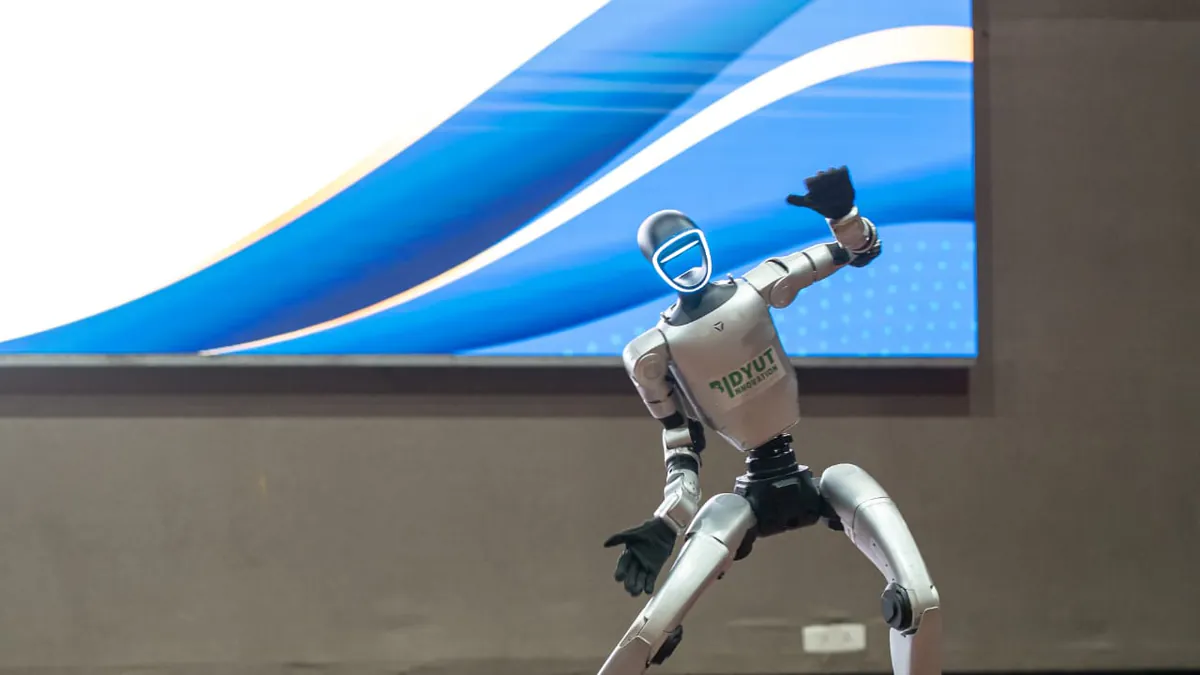
Agility Robotics positions itself as the first pure‑play publicly listed humanoid‑robot company. Its flagship product, the Digit biped, is already deployed in logistics facilities, having logged more than 65,000 hours of operation across nine customer sites and moving over 100,000 totes at a Georgia warehouse run by GXO Logistics.
The company reports over $300 million in committed multi‑year orders for the next‑generation Digit 5, though those commitments are contingent on meeting contractual milestones and product specifications. The robot is slated for early‑access deliveries in the first half of 2027, with general availability targeted for the end of that year.
From an industry perspective, Agility’s public debut brings a sizable pool of capital to a sector that has largely been funded by private venture money. The influx of funds could accelerate the transition of humanoid robots from pilot projects to broader commercial adoption, influencing supply chains, warehouse automation, and even consumer‑facing services.
What it means for investors and the market
For investors, the listing offers a direct way to bet on the commercial rollout of legged robots—a niche that has traditionally been speculative. The company ended 2025 with $103 million in cash, but also posted a net loss of $138.1 million** on revenue of $1.78 million** (up from $310,000 in 2024). About 64 % of that revenue came from related parties, underscoring that the business is still in an early revenue‑generation stage.
Potential upside hinges on the company’s ability to convert the $300 million order backlog into shipped robots and to scale production at its 70,000‑square‑foot Salem, Oregon facility, which is designed for up to 10,000 robots per year. A 50,000‑square‑foot expansion in Pittsburgh aims to bolster software, AI, and customer support capabilities.
Investors should also watch the lock‑up period for existing shareholders, as any early releases could affect share liquidity and price stability. The company’s plan to standardize onboard compute on NVIDIA IGX Thor and integrate NVIDIA Halos safety tech may also create synergies with larger AI hardware players.
For readers unfamiliar with SPAC listings, see our guide on how the stock market works for background on why such deals are used to take companies public.
Practical implications for customers and the industry
Automation acceleration: Companies in logistics, automotive and manufacturing can anticipate more robust humanoid‑robot options for repetitive, physically demanding tasks.
Cost considerations: While the current Digit units are priced for pilot programs, scaling production could lower unit costs, making the technology accessible to mid‑size firms.
Safety and integration: Agility’s partnership with FORT Robotics for safety systems and Nyobolt for fast‑charging batteries aims to address operational downtime and worker‑robot collaboration concerns.
Potential licensing: CEO Peggy Johnson hinted that Agility may license its IP, opening a revenue stream beyond robot sales and offering other developers access to its research.
What to watch next
Key milestones to monitor include:
First‑hand deliveries of Digit 5 to early‑access customers in early 2027.
Progress on scaling production toward the 10,000‑robot annual capacity at the Salem plant.
Any announcements of licensing deals or partnerships that could broaden the company’s addressable market.
Financial updates in the 2026 and 2027 quarterly reports, especially revenue growth and cash burn trends.
Regulatory developments around industrial robotics safety standards, which could affect deployment timelines.
While the company’s technology is promising, the transition from committed orders to realized revenue will be the true test of Agility Robotics’ long‑term viability as a public company.
Dropbox announced a $350 million purchase of AI‑storage startup Tigris Data, its biggest deal yet, to launch DBX Agent Cloud and target developers building generative‑AI applications.
Seattle startup OneCourt partners with the NHL and Ticketmaster to give blind and low‑vision fans tactile tablets at key hockey events, opening new accessibility and investment opportunities.
Block has agreed in principle to pay $764 million to resolve a DOJ investigation into its anti-money laundering controls, a cost exceeding its Q3 profit.