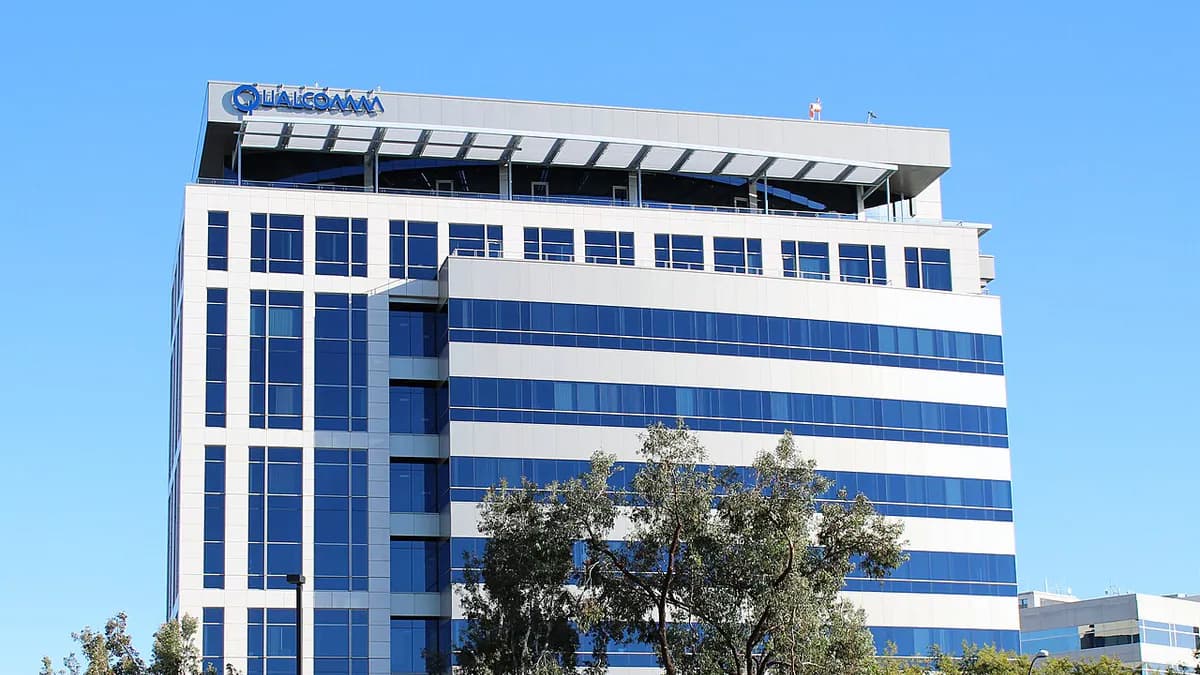
Qualcomm and Snap slide pre‑market after earnings miss
Qualcomm fell over 9% and Snap more than 10% in pre‑market trading on Nov. 5 after earnings reports showed weaker handset chip revenue and modest ad growth.
On Thursday, November 5, 2026, U.S. equity futures were mixed, but two high‑profile tech names fell sharply in pre‑market activity. Qualcomm (QCOM) dropped more than 9% after reporting a fiscal fourth‑quarter revenue decline, while Snap (SNAP) slid over 10% following earnings that fell short of market expectations. The moves came as investors digested the companies' latest financial results and broader concerns about memory‑chip pricing and AI‑related spending.
Qualcomm: non‑GAAP revenue $10.442 billion, down 7% YoY; non‑GAAP EPS $2.17, down 28% YoY; handset chip revenue $5.137 billion, down 26% YoY; automotive revenue $1.99 billion, up 89% YoY.
Snap: third‑quarter revenue $1.722 billion, up 14% YoY but slightly below estimates; net income $56.5 million, reversing a $104 million loss a year earlier; adjusted EBITDA $383 million, up 110% YoY.
Both stocks were already on investors' watchlists, and the earnings releases amplified existing worries about demand for handset chips and the sustainability of Snap’s ad‑driven growth.
Why the moves matter to investors
Qualcomm’s steep decline reflects two intertwined pressures. First, handset chip revenue—its core business—slumped 26% as premium‑tier smartphone sales soften amid higher memory‑module costs. Second, the broader memory‑chip sector, including SK Hynix, SanDisk and Micron, also fell more than 4% in pre‑market trading, indicating that pricing pressures are spilling over into related suppliers.
Snap’s slide is tied to its advertising revenue outlook. Although the company posted a 14% revenue increase and turned a profit, analysts had expected a larger top‑line beat. The modest miss suggests that ad spend growth may be slowing, especially as brands evaluate the effectiveness of short‑form video formats.
Both companies are key components of the Nasdaq‑100, so their weakness weighed on the index futures, which were down 0.49% at press time. For portfolio managers, the earnings gaps raise questions about the near‑term earnings momentum of the broader tech sector.
What to watch next
Investors will be looking for several follow‑up signals:
Guidance from Qualcomm for fiscal 2027, particularly whether the company expects handset chip demand to stabilize or if it will lean more heavily on its automotive segment, which showed strong growth.
Snap’s guidance on user growth and ad pricing. The company’s next‑quarter outlook will indicate whether the recent profit turnaround can be sustained.
Memory‑chip pricing trends. Continued pressure on SK Hynix, SanDisk and Micron could affect Qualcomm’s margins and the broader semiconductor supply chain.
Macro‑level data‑center regulatory developments, which have already dampened AI‑related equities and could influence future demand for Qualcomm’s 5G and AI‑accelerator chips.
Practical impact for investors and consumers
For investors holding these stocks, the earnings reports suggest a need to reassess risk exposure. Qualcomm’s decline highlights the volatility that can arise from a single product line—handset chips—while its automotive revenue surge shows a potential diversification path. Snap’s rebound from a loss to profit is encouraging, but the revenue miss signals that ad‑spend growth may be uneven.
Consumers may feel the effects indirectly. A slowdown in handset chip production could translate to higher prices for smartphones or delayed rollout of 5G‑enabled devices. Meanwhile, Snap’s ad‑pricing adjustments could influence the cost of advertising for small businesses that rely on the platform.
U.S. stock index futures rise on Monday as investors digest Fed policy, midterm elections and Apple’s upcoming earnings. Key numbers and what to watch next are highlighted.
Neocloud IREN reported $228 million Q1 revenue but said a $4 billion annualized run‑rate target has been pushed to at least January after a customer request, raising questions for investors.
Kimberly-Clark posted a sixth straight earnings beat despite organic sales falling 1.3%. The company reaffirmed its outlook three days after closing the $49 billion Kenvue acquisition.
Nvidia and Qualcomm shares fell sharply on Nov 5, dragging the Nasdaq to its worst day since April 2025 amid fears that new AI regulations will slow data center growth.
Cardinal Health reported a 5% revenue jump to $67.5 billion and lifted its FY2027 non‑GAAP EPS target to $12.80‑$13.00, prompting a stock surge and new analyst focus.