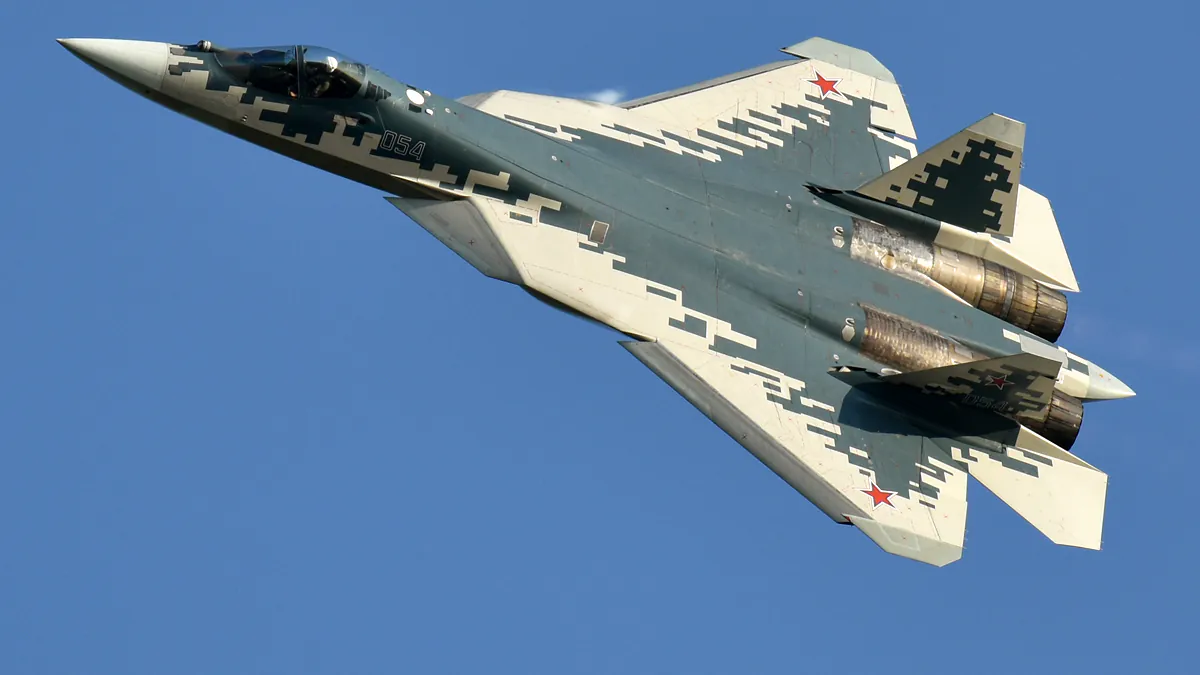
A Russian Su‑57 stealth fighter crashed at Akhtubinsk airbase on Oct. 29, Ukrainian intelligence says faulty imported fuel may have caused the engine failure, highlighting the impact of Ukraine’s refinery attacks on Russia’s aviation supply chain.
A Russian Su‑57 fifth‑generation stealth fighter crashed at the Akhtubinsk military airfield in the Astrakhan region on October 29, according to Ukrainian military intelligence. The jet was reportedly destroyed during engine startup, with officials pointing to poor‑quality aviation fuel as a possible cause.
What Happened
The incident was first reported by Ukraine’s Defense Intelligence Directorate (HUR) on November 2. The aircraft, powered by AL‑41F1 turbofan engines, was on the ground at Akhtubinsk when it exploded. Ukrainian intelligence has not confirmed the exact trigger but has linked the failure to the use of substandard jet fuel that Russia has been forced to import after Ukrainian strikes on its refineries.
Why It Matters
The Su‑57 is Russia’s most advanced fighter, valued at roughly $150 million. Its loss underscores the growing strain on Russia’s military aviation due to the war in Ukraine. The incident also highlights how Ukraine’s long‑range attacks on oil refineries have disrupted Russia’s domestic fuel production, forcing the country to rely on imports from India, Egypt, and South Korea.
Fuel Supply Chain Disruption
Ukrainian intelligence reports that nearly 40,000 metric tons of Jet A‑1 fuel were shipped from India’s Vadinar refinery in August. The cargo was transferred at sea to the HALCYON tanker and delivered more than 37,000 metric tons to the Russian port of Nakhodka on September 23. The same fuel type is used in other Russian fighter jets and drones, including the Geran‑4 and Geran‑5.
Broader Context
Ukraine has launched over 300 attacks on Russian refineries this year, striking more than two dozen successfully. These strikes have reportedly knocked out half of Russia’s refining capacity, leading to front‑line fuel shortages and domestic inflation spikes. The Su‑57 incident is one of several recent Russian aircraft losses attributed to technical failures or Ukrainian strikes.
Similar misinformation has spread during the conflict, see this story for how false alerts have affected public perception.
What This Means for Readers
For those following the war, the crash signals a tangible operational impact on Russia’s air power. It also illustrates how supply chain disruptions—specifically aviation fuel—can directly affect combat readiness. Investors in defense contractors may note that continued refinery attacks could increase demand for alternative fuel sources or domestic production. For the general public, the incident reminds that the war’s reach extends beyond the front lines, affecting industrial infrastructure and military capabilities.
Su‑57 exploded on Oct. 29 at Akhtubinsk airfield.
Ukrainian intelligence cites poor‑quality Jet A‑1 fuel as a likely cause.
Fuel imported from India, Egypt, South Korea after refinery attacks.
Nearly 40,000 t of Jet A‑1 shipped from India in August.
Ukraine has contracted thousands of ground robots to replace front-line troops, but autumn mud and winter weather now pose serious operational challenges.
Royal Navy patrol ship HMS Medway fired 120 live rounds during a training exercise near the Falkland Islands, underscoring the UK’s commitment to the territory amid heightened tensions with Argentina.
A new wave of cyberattacks on supermarket refrigeration systems in Sweden, Belgium, Luxembourg and Estonia forced stores to discard food, prompting worries for retailers, equipment makers and investors.
New evidence suggests Russia hacked Ukraine's alert app, while Moscow blames Kyiv, highlighting a tit‑for‑tat cyber war that has already neutralised thousands of attacks.