Sysco aims for $500 Million AI-driven cost savings by 2029
Sysco is using AI for routing, supplier bidding and sales to target $500 million in savings by fiscal 2029, a move that could reshape wholesale margins.
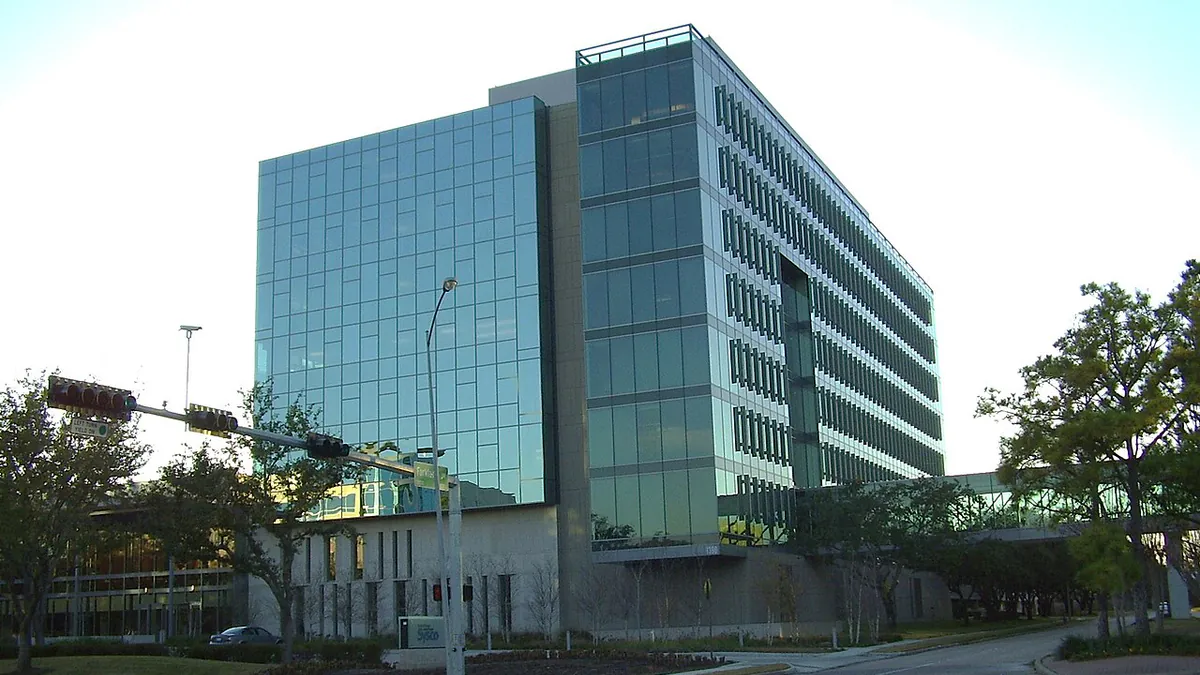
Photo: WhisperToMe / Public domain via Wikimedia Commons
What Sysco is doing with AI
Sysco Corp., the United States’ largest food‑service distributor, announced that its AI‑driven efficiency program is on track to generate $500 million in cost savings by the end of fiscal 2029. The initiative, launched in a September 9 press release, focuses on four workstreams: supply‑chain productivity (routing, warehouse selector efficiency and miles driven), merchandising and procurement automation, indirect‑spend management, and back‑office simplification.
During the fiscal first‑quarter 2027 earnings call on Nov. 3, CEO and Board Chair Kevin Hourican said the routing pilot is delivering “2% to 4% more pieces per mile,” meaning each truck moves more cases for every mile driven. He added that every 1% gain in pieces per mile translates to roughly $3 million in savings when applied company‑wide.
Other AI tools are already showing results. An AI‑powered request‑for‑proposal process beat its savings target by 30%, and the AI360 sales‑consultant platform lifted Sysco’s brand‑mix in local accounts by 44 basis points. CFO Brandon Sewell noted that reverse‑auction tools, which cover more than $1 billion of annual indirect spend, have been piloted on truck parts and tires.
Why the AI program matters
Sysco operates 333 distribution centers, serves about 670,000 customer locations, and drives 4.5 million miles weekly across the United States. Those three recurring cost categories—fuel and driver time, supplier pricing, and sales‑rep labor—represent a massive expense base. By improving routing efficiency, automating procurement and sharpening sales recommendations, the company aims to lower the cost of moving each case.
According to PYMNTS Intelligence, wholesale firms use AI for 35 of 75 tracked business tasks, compared with 20 in retail and 22 in construction. Moreover, 85% of wholesale executives say future AI spending will prioritize margins and profitability. Sysco’s $500 million target therefore reflects a broader industry shift toward AI‑enabled margin protection.
What it means for investors and the food‑service market
For shareholders, the $100 million of net cost savings expected this fiscal year provides an early indicator of the program’s impact. If the $500 million goal is met by fiscal 2029, it could improve operating margins and free cash flow, potentially supporting dividend growth or strategic acquisitions.
Customers may see indirect benefits such as more reliable delivery windows and a broader offering of Sysco‑brand products, thanks to AI‑guided sales recommendations. Competitors like US Foods are already reporting similar routing gains (2% improvement in cases per mile), suggesting the competitive advantage could be short‑lived unless other firms accelerate their AI roadmaps.
333 distribution centers in 10 countries
670,000 customer locations served
4.5 million miles driven weekly in the U.S.
AI routing improves cases per mile by 2%‑4%
Supplier‑bidding AI exceeds targets by 30%
AI360 lifts brand‑mix by 44 basis points
Target: $500 million savings by fiscal 2029; $100 million expected this year
30 initiatives; four account for ~70% of projected value
What to watch next
Key milestones include the rollout of routing software to every U.S. broadline location this fiscal year, followed by specialty and international units. A second routing phase, adding AI simulation for tighter delivery windows, is slated to begin at the end of the fiscal year and will contribute most of its impact in fiscal 2028.
Investors should monitor quarterly updates on AI‑related cost savings, the adoption rate of AI360 among sales consultants, and any competitive moves by rivals in the wholesale‑distribution space. The broader trend of AI adoption across wholesale tasks—tracked at 35 of 75 tasks—will also shape margin expectations for the sector.
Construction‑robotics startups have raised $1.6 billion in 2026, driven by three massive rounds, as labor shortages push contractors toward autonomous solutions.
Oscar Health reported Q3 revenue up 70% to $5.1 billion and membership at 2.6 million, highlighting new products for gig workers and early retirees and AI‑driven platform upgrades.
Estée Lauder’s first quarter of fiscal 2027 saw sales rise 7%, adjusted EPS double, and margin climb to 12.1%, keeping its 13‑quarter EPS‑beat streak alive and raising questions about China demand and future growth.
Affirm’s Max Levchin told analysts AI shopping agents are likely to steer shoppers toward interest‑free installment loans, a shift that could reshape financing and affect investors.